
How to Tell If Winter Weather Has Damaged Your Roof in Colorado Springs
Winter in Colorado Springs brings freezing temperatures, snow, strong winds, and rapid freeze–thaw cycles — all of which can cause hidden roof damage. Even if your roof looks fine from the ground, winter weather can create problems that only become noticeable once spring storms arrive.
Identifying winter roof damage early helps prevent leaks, structural deterioration, and costly repairs. Here’s how to spot issues and when to call the experts (we) for a professional inspection.
Common Signs of Winter Roof Damage
Below are the most common signs Colorado Springs homeowners see after winter storms.
1. Ice Dams & Water Staining
Ice dams form when heat escapes from your attic, causing snow to melt and refreeze at the roof edge. Signs include:
Water stains on ceilings or walls
Dripping from soffits or gutters
Buckling paint or bubbling drywall
If you’re noticing these signs, check your gutters and attic as well.
2. Missing or Damaged Shingles
Colorado’s winter winds can tear shingles loose or crack them during freezing conditions. Look for:
Curled shingles
Cracked or broken shingles
Dark patches indicating missing shingles
These issues can quickly lead to leaks as snow melts.
3. Attic Moisture or Frost
An overlooked sign of roof damage is condensation in the attic. This happens when warm interior air rises and meets cold roof decking.
Check your attic for:
Visible frost on nails or wood
Damp insulation
Musty odors
These are early signs your roof ventilation needs attention.
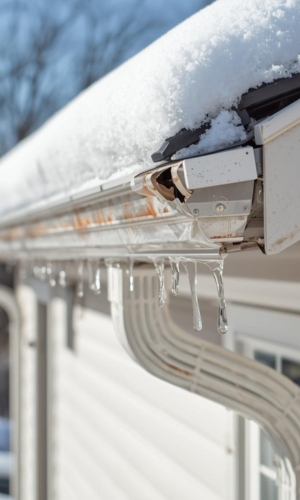
4. Damaged Gutters & Downspouts
Gutters often take the brunt of winter storms. Damage may include:
Pulling away from the home
Cracking or splitting from freeze cycles
Ice buildup preventing drainage
A damaged gutter system can create water overflow that affects your foundation and roof edge.
5. Sagging Roof Areas
Heavy snow accumulation can cause structural stress. If you notice:
Dips or sagging areas
Cracking sounds during snowstorms
Visible interior bowing
You should schedule a roof inspection right away.
How Colorado’s Weather Specifically Impacts Your Roof
Colorado Springs’ unique climate increases roof wear:
High elevation UV exposure breaks down shingles faster.
Strong winds can lift shingles or damage flashing.
Frequent freeze–thaw cycles weaken roofing materials.
Heavy snowfalls add weight and moisture exposure.
This is why many local homeowners benefit from annual winter roof inspections — especially if your roof is older than 10 years.
DIY Checks You Can Do Safely
You should never walk on a snowy or icy roof, but you can do these safe checks:
Inspect for missing shingles from the ground
Look for gutter blockages
Check attic beams for frost or dampness
Review interior ceilings for stains
If anything looks off, contact a professional for a closer inspection.
When to Call a Professional Roof Inspector
You should schedule an inspection if you notice:
Leaks or interior water damage
Ice dams forming repeatedly
A sudden increase in attic moisture
Storms with high winds or heavy snow
We perform full roof inspections that include:
Roof surface evaluation
Attic ventilation analysis
Gutter and drainage review
Photo documentation for tracking and insurance claims
This is especially helpful if you plan to file a claim after winter damage.
How We Help With Winter Roof Damage
We provide:
Winter roof inspections
Ice dam mitigation
Shingle and flashing repairs
Gutter repair and replacement
Insurance documentation support
If repairs are needed, we’ll walk you through every step — from identifying the issue to completing the work with high-quality materials.
FAQs
Should I wait until spring to inspect my roof?
No — delaying allows water intrusion to worsen. Winter inspections help stop damage early.
When is winter roof damage most likely to happen?
After heavy snow, high winds, and sudden temperature drops common in Colorado Springs.
Can attic ventilation really prevent winter roof issues?
Yes. Proper ventilation reduces condensation and ice dam formation.
Protect Your Roof Before Small Issues Become Big Problems
Winter weather in Colorado Springs is tough on roofs, but early detection can save you from major repairs. If you suspect damage — or just want peace of mind — we’re here to help.